MCNE
Utah has 23 Master Certified Negotiation Experts
I am glad to be one of them.


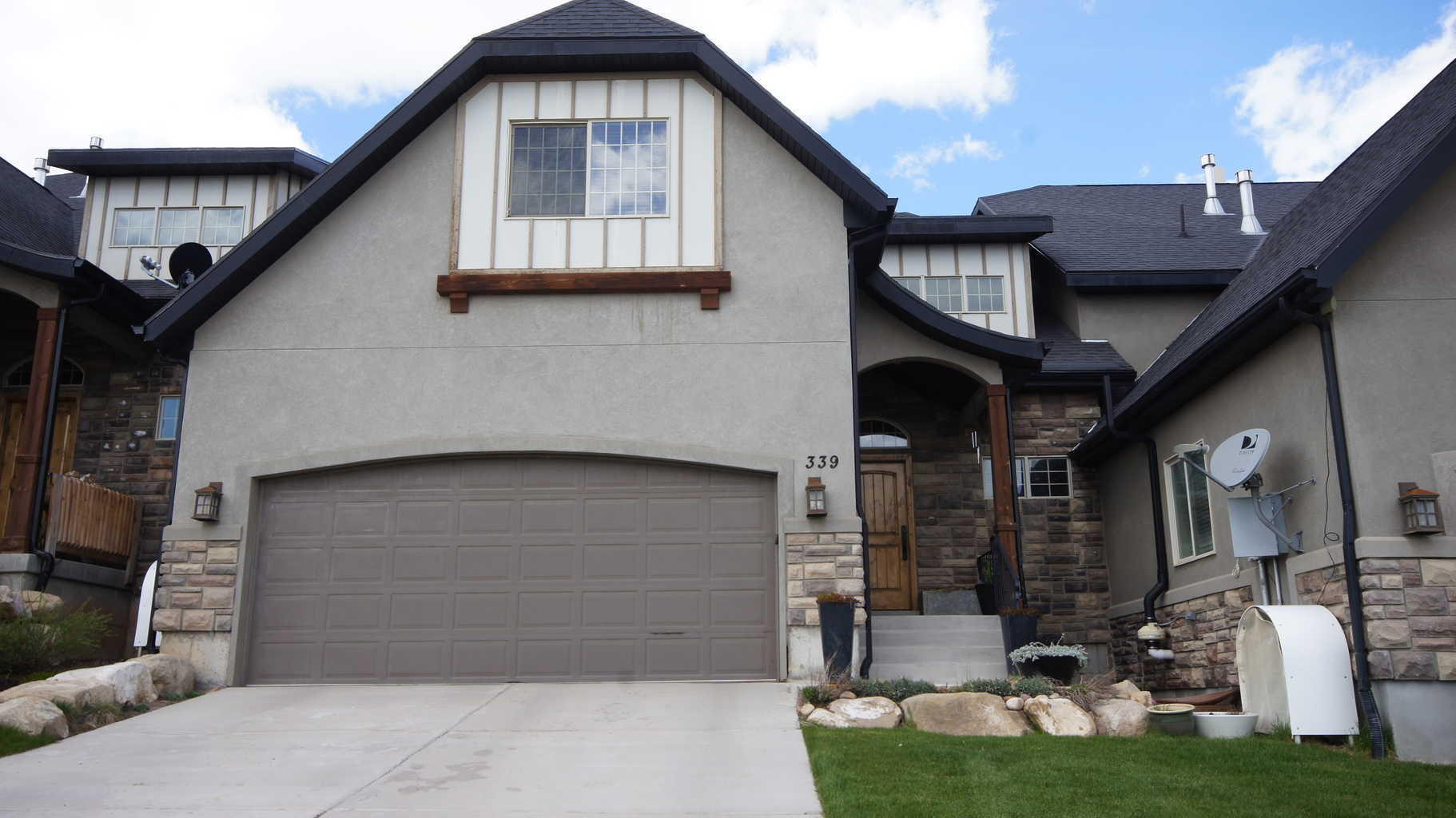
Located west of Homestead Drive. Turn west on to Swiss Alpine Rd. Left on 1320 West. Right on 365 North.
Nestled in the foothills of midway with scenic views of Heber Valley and the Wasatch back. This spacious home has a large island kitchen, main floor master suite, large bedrooms and 3 gatherings areas. Deck off great room and Main floor Master. Luxury appoints thru out the home. Granite counter-tops, 8 foot entry door, grand foyer, custom twin sinks in baths, walk-in closets. Lots of Storage. Enjoy the lifestyle without the yard work. Nearby are Park City and Deer Valley. Next door are Wasatch, Crater Springs and Soldier Hollow Golf Courses. Scuba Diving , Horse back riding and ATV areas just minutes away. Fire your therapist! Breath the clean air, live the dream and Love the lifestyle!
Divorce and the House
Often the house where the two of you have lived together will be the single largest asset of the marriage. In most cases, you and your spouse have owned the house jointly, and you owe money on the mortgage jointly.
Often one of you will be moving out, and the other will plan to stay in the house and continue making the payments. At some point down the road, the the one who stays in the house will sell it or refinance the loan, but often that doesn’t happen right away. Let’s think through some things you need to think about if you’re planning that kind of arrangement.
Getting Disentangled
If you’re the one who’s staying
If you’re the one who’s leaving
Capital gains
Gathering information
What kind of deed?
Selling the house
When you have to live together
Getting Disentangled
We can get really creative with the arrangements we make with our house in divorce. Whenever I’m tempted to say that I’ve seen every possible permutation of the interlocking relationships people have about their house, along comes another divorcing couple to show me yet another way to do it.
I generally try to talk my clients into doing whatever it takes to get as disentangled as practicable, as quickly as practicable. I think this is particularly important with the house.
Richard and Cynthia got creative. They knew as they negotiated their divorce that cash was tight. They both wanted Cynthia and the kids to stay in the house until they left for
college. Cynthia and Richard agreed to continue owning the house together for as long as eight years after divorce. By that time, she had to sell the house and split the proceeds with Richard equally.
Richard and Cynthia are divorced, but now they’re still partners. They’re business partners because they’ve invested in this #$@& house together.
Whenever Richard drives by, he looks to see if Cynthia is taking care of the lawn and the shrubs. He frets about the color she painted the shutters. And he really doesn’t care much for the way she’s letting the kids and their friends throw the ball in the living room.
What’s more, he’s just now figured out that he’s going to owe capital gains taxes on the profit from the sale of the house when it happens. And because it’s not his principal residence any more, he won’t be able to take advantage of any rollover provision.
Cynthia finds it offensive and invasive, of course, that Richard worries about how she lives her life. And she too is just beginning to focus on how all this affects her economically. Although she’s pleased that Richard will share some of the tax burden on the gain of the house, she believes most of the appreciation in the house value has come after divorce, and she resents having to share that with Richard. “This is the one thing of value I walked away with, and I’m having to give half of it to him,” she says. “It’s just asinine!”
If you and your spouse are talking about an arrangement in which you both remain owners of the house for a long time in the future, where you both remain on the loan for a long time in the future, or where you share some designated percentage of the proceeds of the sale of the house out in the future, stop. See if there’s not some way one of you can take all the upside and all the downside of the house. That will give you one less thing to argue about — one less thing to resent down the road.
If You’re the One Who’s Staying
First, you need make sure you can afford the mortgage payments. One of the things I’ve discovered is that, in almost every case, people who get divorced underestimate what it’s going to cost them to live once the divorce is finished. Do yourself a favor: develop a comprehensive budget before you lock yourself in to a divorce settlement and make sure you really can live within it.
You need to make sure you understand the way capital gains tax works. More about that below.
You also need to think through whether what you really want is simply to win the house, or whether you really want to live in it. It’s happened enough now with my clients that I need to tell you about it. You may insist throughout the negotiations of your divorce that you’re going to keep the house. You may think strategically and make valuable concessions to keep it.
Then you may realize less than a year later that the house harbors so many atrocious memories for you that you can’t stand to wake up in it another day. You put it on the market and sell it so you can escape. You will have lost money, sometimes thousands of dollars, that you can’t afford to lose.
What’s the lesson? If you’re negotiating hard for the house, take a time out. Take time to walk through each room. Sit quietly in each room. Lie down in the bed you and your spouse shared. Picture a day three or four years after your divorce when your marriage will be a memory. Is this the place you will want to sit and sip orange juice? Is this where you will want to entertain your friends? Is this where you will want to relax when you’ve had a hard day?
Your answer may very well be, “Yeah, Lee, this is where I want to be. Get off my back.” Good. Just make sure you ask yourself the questions.
If You’re the One Who’s Leaving
You need to think through how this is going to affect your credit. Even though you won’t be living in the house any more, the lender still has your name on the loan, and if your spouse doesn’t pay, the lender could come looking for you. When that happens, the lender won’t care much that you haven’t lived in the house – the lender wants its money, and you’re still obligated to pay it.
Even if your spouse is absolutely faithful in making the mortgage payments, though, there’s another possible problem. Because you still owe a great deal of money on the house, it may be difficult or impossible for you to borrow to buy another house or to make another large purchase until you’re off the loan entirely.
If you’re going to continue owning an interest in the house, make sure you think through the capital gains tax. Specifically, you might lose your rollover option because the house won’t be your principal residence by the time you sell.
One other thing to think about when you’re getting ready to move: creditors often downgrade your credit score when you show multiple addresses of short duration. That doesn’t mean you shouldn’t move, of course, but it probably does mean you should be circumspect about each move you make, knowing that it may have some impact on your credit rating.
Capital Gains
Not long ago, capital gains on the sale of the house was a huge issue in divorce. This is less so today, though. Almost any taxpayer selling his or her principal residence after May 7, 1997 gets a $250,000 exclusion from gain, and a married couple gets a $500,000 exclusion. You should consult your tax specialist on this to be sure.
Gathering Information
There’s a whole headful of information you may need to gather if you and your spouse own a house (or for that matter, any real property). You can check out a full explanation of the information you’ll need to gather, including information about what the house is worth.
What Kind of Deed?
When one of you is conveying the house to the other, you have several choices available when it comes to the kind of deed you use. There’s a separate page here about the Different Kinds of Deeds people can use in divorce. Unless you get a new loan the other party is still obligated to the underlying loan. This tends to be a real problem in many divorces when one party keeps the house.
What About the Loan?
One of the worst consequences of owning a home together is the loan that you originally got to buyer to buy the house. These are some questions you need to as yourself.
Did both parties jointly apply for the loan?
Do either party qualify for a new loan by themselves?
What happens if you both stay on the loan and the party that stays in the home fails to pay the mortgage? Is your credit to take a hit? YES!
There’s no question or disagreement between you and your spouse that if you’re selling the house, you want to get top dollar. How do you do it? This subject is important enough, and it comes up often enough, that I’ve added a separate page called Selling Your House When You’re Divorcing.
When You Have to Live Together
There are many things about divorce that don’t surprise me anymore. One of them is the stoic, Spartan utterly resilient creativity I see every day from couples in troubled marriages who have to keep living under the same roof.
Why do you have to live together?
Maybe it’s because you both want to be close to your children.
Maybe it’s because you’re not ready yet for your friends to know that your marriage is coming apart.
Maybe it’s because both of you are maneuvering for ownership of the house, and you’re both convinced that your claim will be stronger if you’re living there. If so, you’re probably both right.
Maybe it’s because one of you is convinced that if you move out, you’ll be accused of abandonment or desertion. Fears of that are way overblown, by the way.
Usually, though, it comes down to what drives so many decisions in divorce — money. You’ve looked into the price of living somewhere else, and you’re not ready or able to make the leap financially.
So what do you do?
You stay together.
And you do what you have to do.
Many of you are already living in separate rooms in the same house. That’s to be expected. But some of you become much more innovative.
Larry lived in one room of his apartment for two and a half years. Because he had things in the room he was afraid his wife would take, he locked the door from the inside and used only an outside window to enter and leave.
Charlton lived in a trailer out behind the house for three years. There was electricity to the trailer, but no phone and no heat except for a small kerosene burner from Wal-Mart.
Shanna couldn’t afford to move out, so she and Frank slept in the same room for 18 painful months. He slept in the bed. She slept sitting up in non-reclining easy chair. “I still have the pain in my neck to show for it,” she told me.
If you and your spouse are stuck under the same roof, I don’t really have any advice for you about how to do it. I can only tell you you’re not alone. You’ll get through it. Maybe one day you’ll even laugh about it.
Selling the house
If you can sell the house, that’s the easiest way to put this joint debt behind you!
The house was originally meant for the two of you, but it’s not the two of you now. Best Advice . Sell it, pay off the mortgage and move on.
Agreeing on a Price
A successful way to come to terms on a price everyone can live with is having a Value Range Broker Price Opinion. This will give you several pricing options.
1. Price based on your neighborhood sold comparable. This is the closest thing to an appraisal without the $500.00 or so price tag. Commonly used in divorce settlements. It is usually the lower value of the three.
2. Price based on active competing listings that have not sold. This is usually the highest value.
3. Price based on both active and sold comparable in the area. Nice middle ground value.
Once you have a price that is agreeable. Set some goals for time frame of the sale. Example: Four month listing term. Month one asking price stays the same and every two weeks reduce the price. Find an agreeable increment of $500 to $5000 pending price and market. Use the sold comparable to keep focus on where to stop reducing the price. Very important the both parties agree to a “walk away price” or rock bottom price. You should both agree to this in writing.
FOR SALE BY OWNER??
Why some homeowners try to sell their home on their own. So is this a good idea? Many past For Sale By Owners say “ this wasn’t such a good idea”.
Top reasons that sabotage a For Sale by Owner.
1. So many people to keep track of and Negotiate With. You must be prepared to negotiate the sale yourself. The savvy buyer wants the best deal possible! The buyer’s agent solely represents the best interest of the buyer (90% of all buyers are represented by a Realtor®). DEAL KILLERS! Home inspection companies. Their job is to find problems with your home! A savvy buyer will then usually ask for a substantial price reduction! The appraiser, who is blindly selected by the buyers lender often times, will question value.
2. Exposure to home buyers. New studies have shown that up to 91% of buyers search online for a home. And some experts say that the large sites such a Zwillow and Trueila are notorious for posting old data. And only a tiny percentage is actually there for home shopping. The large sites are mostly just used by people for entertainment. Most Realtors® have multiple internet strategies to promote the sale of your home. Do you?
3. Results Come from the interweb. Where do buyers find the home they actually purchased? 43% on the internet, 9% from a yard sign, 1% from newspaper. The days of selling your house is not about just putting a sign in the yard an ad in the paper. It is critical to have a successful internet strategy.
4. For sale by owner selling has become more and more difficult! The paperwork involved in selling and buying a home has increased dramatically as industry disclosures and regulations have become mandatory. This is one of the reasons that the percentage of people selling their own home has dropped from about 20% to less that 10% over the last two decades.
5. Netting more money when using Realtor®
What ?? this usually the case.
Save the commission and sale yourself? Unfortunately the main reason buyers look at for sale by owners is for the same reason, they can save the commission! A sad fact the seller and buyer can’t both save the commission. The buyer just reduces the price what he or she thinks the commission is.
Experts say thought various studies that the typical house sold by the homeowner sells for $208,000 while the typical house sold by an agent sells for $235,000. This doesn’t mean that an agent can get $27,000 more for your home as studies have shown that people are more likely to FSBO in markets with lower price points. However, it does show that selling on your own might not make sense.
In Conclusion
You might want to sit down with a Realtor® before you decide to take on the challenge.

When searching for a top real estate agent or Realtor in Salt Lake City, Utah is it best to find the most popular or the most qualified? Believe it or not there is a difference. You can find the guy or gal the advertises on the radio constantly and try to get in touch with them. If you are not a perfect match for them, ready to sell or buy or just have some initial questions good luck! Sometimes agents that can throw money at marketing are not going to really care about you needs and timelines.
If you’re thinking about buying or selling a home? Want a Top Utah Realtor. Want your process to easy as possible. Want the best price you can get? Utah Realty has a top Realtor team to do just that. If success means getting your property sold quickly and for the highest price possible. We always can get the most money for you as a seller. Don’t sacrifice experience for the allure of discounts. The real proof is in the track record. That means our clients always come back to us time and time again. If you’re buying, it means finding your next dream home and getting into it, affordably. On top of that, if you’re like most of my satisfied customers, you also want everything to go smoothly, with as little stress as possible. Marty Gale and his team are time test award winning top agents!

Find Homes for Sale in Sandy, Utah
See 10 of the newest listings for sale in sandy Utah
Homes for sale in Sandy Utah start in the low $100,000’s with several homes in Sandy selling in the millions. There are between 150 and 500 homes for sale in Sandy Utah. Sandy offers Homes for sale in 84092. Luxury home can be found all around Sandy Utah. More Homes in Sandy zip code 84094.
Whats going on in Sandy City? Here is a link to the Community resource page.
When a home is listed for sale on our local Realtor's Listing service it simultaneously goes to UtahRealtyPlace.com . This makes the most accurate and reliable real estate website in Utah. At Utah Realty you will know about the newest listed homes for sale in Sandy before most Realtors do.

Statewide residential listings for Utah. Utah Real Estate Listings. Displayed are Residential homes.
Our website contains ALL listings from ALL Real Estate Agents in the state.
Map of all the active homes in the MLS.
These properties come and go fast! Check our site often.
You can log in and create a hot sheet that will inform you of the newest listed properties as they come available. (Best way of staying informed)
Utah Homes For Sale, Utah Real Estate with Utah Realty
Find homes in Utah for Sale right here. The most and the newest listings from the MLS, Wasatch Front Regional Multiple Listing service. Free State wide list of homes for sale.